Framing, Grading, and Final Quality Control
High School Camp 2026 – The final polish. I adjust framing with the rule of thirds, dial in my color nodes, and mix the final audio beds for export.
7 min read
Workflow Update

New: Composition
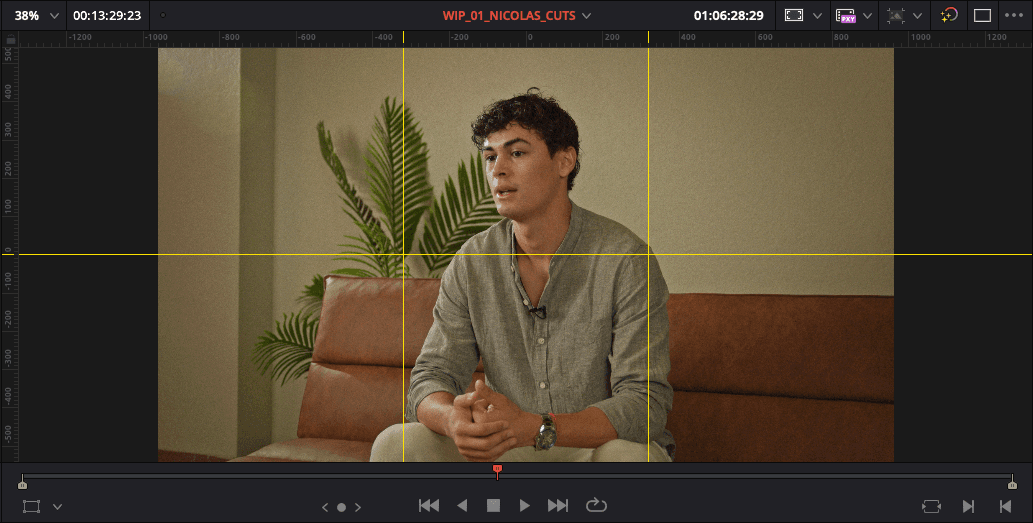
The final phase of my editing workflow is entirely about precision and polish. I begin by double-checking the composition of every single clip. Using DaVinci Resolve's Inspector tool, I activate a rule of thirds grid overlay. I meticulously adjust the Transform settings—tweaking the Zoom and Position to ensure the subject's eyes land perfectly on the upper third line. I also utilize Smart Reframe and dynamic cropping to maintain visual consistency across all four testimony shoots.
New: Grading
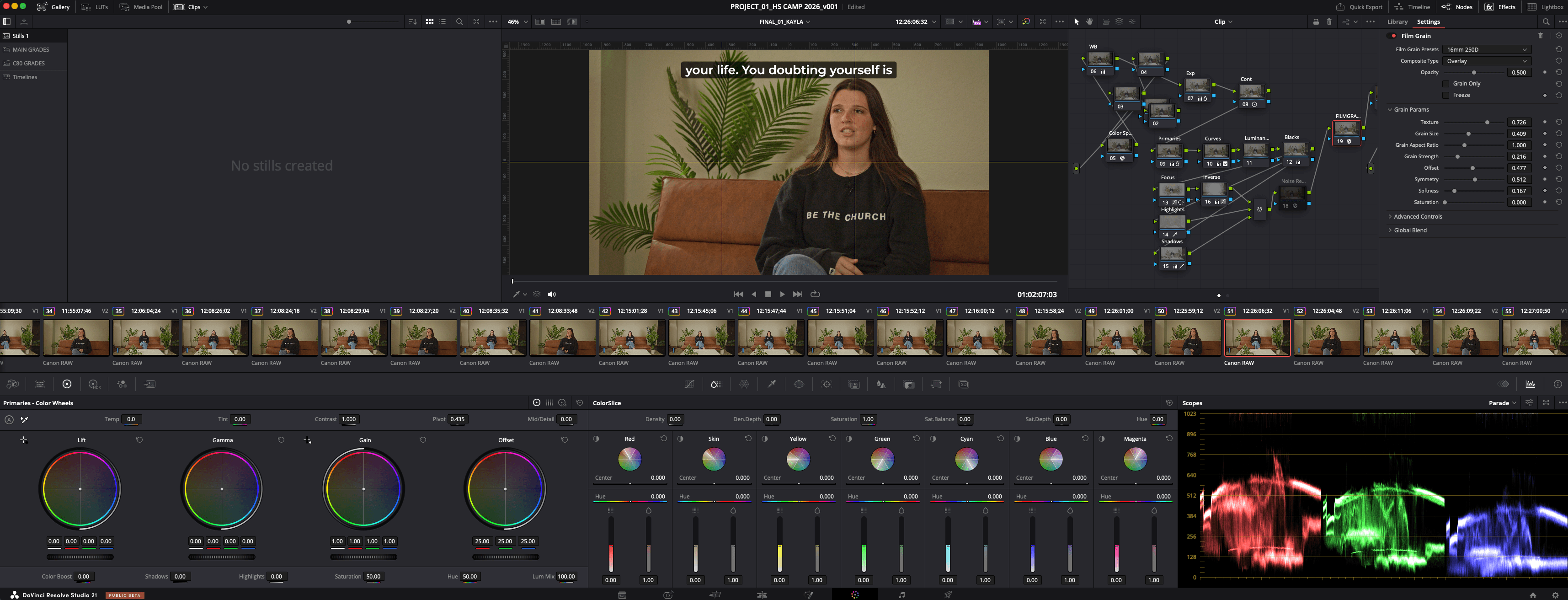
Because I shot these interviews in a controlled environment, my color grading process is streamlined but critical. I start with a Color Space Transform (CST) to bring my log footage into a standard Rec.709 color space. From there, I work through a node tree: balancing exposure, correcting skin tones to ensure they sit perfectly on the vectorscope's flesh line, and finally applying a subtle, warm, cinematic look that matches the aesthetic of my church's branding.
New: Finishing
The last check I perform is the audio mixdown. I ensure the dialogue sits front and center, typically hovering around -6dB to -3dB. I apply vocal compression to smooth out any harsh peaks and an EQ to roll off muddy low frequencies. I then carefully keyframe the music bed to duck under the dialogue and swell during emotional pauses. Once I’ve checked the meters and fully rendered the timeline, I export my final deliverables in high-quality H.264 or ProRes for web distribution.